

March 29, 2026
Strategic Context
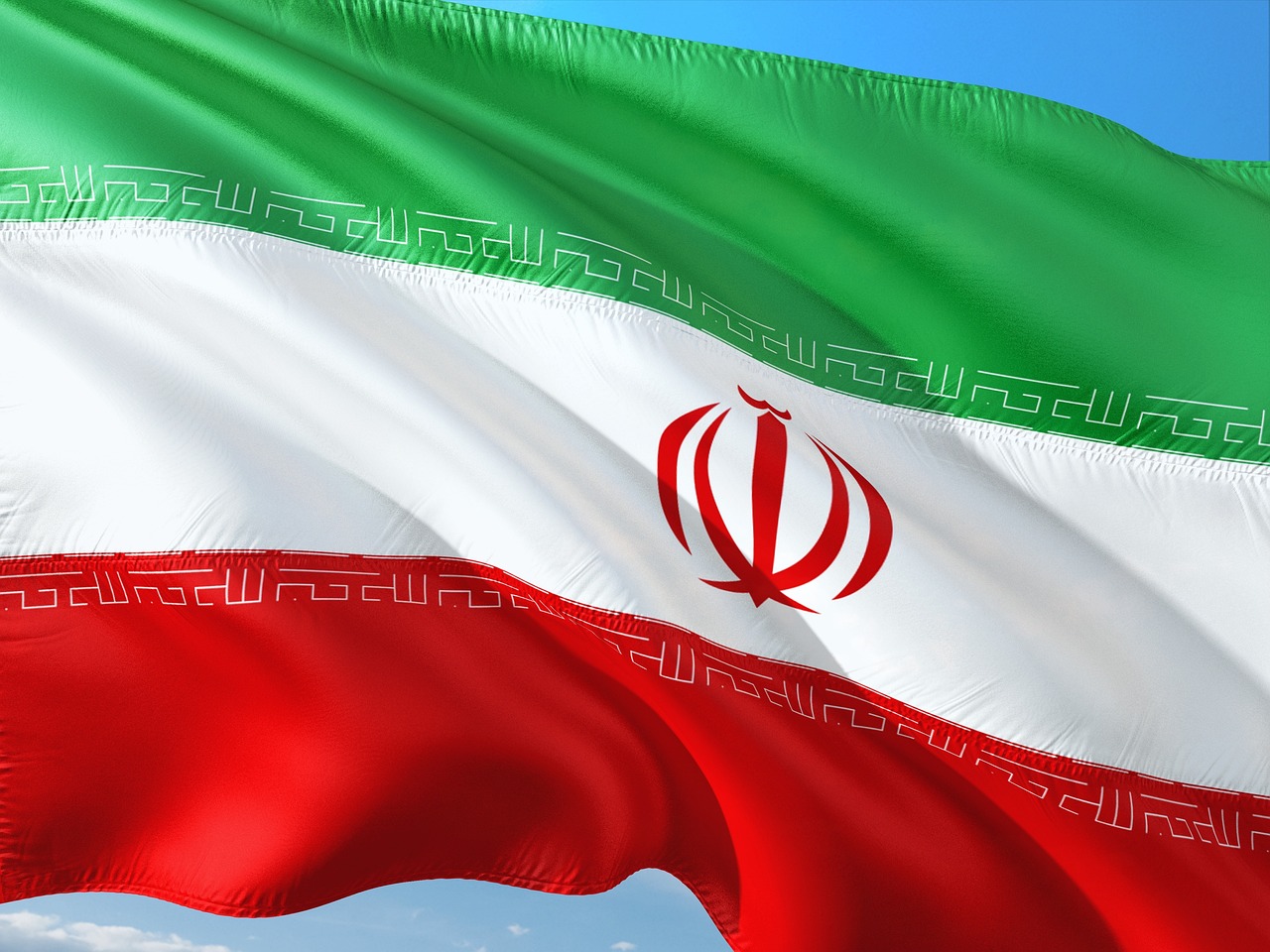
The past week has been shaped by a widening gap between immediate risk and ongoing strategic competition. Escalation concerns around Iran are driving that tension. Rising oil prices are beginning to feed into the global economy, while the prospect of Houthi involvement has renewed concerns about disruption in the Red Sea and the return of sustained pressure on maritime trade routes.
That risk is not occurring in isolation. It is unfolding alongside continued movement elsewhere. Europe is accelerating defense spending but struggling to coordinate it. In the Indo-Pacific, the military balance is shifting toward volume rather than platform advantage as China turns to drones to increase pressure on Taiwan.
The result is a system operating on two levels at once. Short-term escalation risk is capturing attention and introducing economic friction, while longer-term shifts in military capability, industrial capacity, and technological competition continue to advance. The interaction between those two dynamics is becoming the defining feature of the current environment.
Key Judgments
1) Europe’s defense surge became more concrete, and more complicated
NATO’s annual report showed European allies and Canada increased defense spending by 20% in 2025, with overall alliance spending at 2.77% of GDP and Poland, Lithuania, and Latvia already above the new 3.5% core-defense benchmark. In parallel, the EU’s Security Action for Europe (SAFE) program, a €150 billion loan facility that helps member states finance defense procurement without immediate budget strain, is beginning to take shape. Brussels also signaled that a UK-EU arrangement on British participation remains plausible.
But the week also exposed the next problem. Germany’s push for a separate €10 billion military satellite network, alongside the EU’s IRIS² system, sharpened fears that Europe may respond to urgency with overlapping national programs rather than interoperable common ones. Norway’s decision to add 115 billion crowns to its long-term defense plan reinforced the sense that northern Europe is moving quickly, but not through a single model.
Why it matters: Europe is no longer debating whether to spend. It is debating the operating model of rearmament. That is the more consequential shift. SAFE lowers the financial barrier to speed, but it does not solve coordination. Speed favors national programs. Strategic efficiency favors common standards and pooled demand. Europe is now attempting to do both, with no clear resolution yet.
2) Taiwan’s deterrence problem looked more like an industrial and attritional problem than ever
Taiwan’s defense minister said the United States now has a high sense of urgency about speeding weapons deliveries, including long-delayed F-16Vs. That matters, but the more important signal came from a new report cited by Reuters showing China has stationed more than 200 J-6 fighters converted into attack drones at bases near the Taiwan Strait.
Beijing appears to be building cheap, scalable options that can impose real costs early in a crisis, saturate air defenses, and force Taiwan to spend high-end interceptors against low-cost incoming systems. Brookings noted this month that conflict is neither imminent nor inevitable, but that U.S. policy must strengthen deterrence without feeding miscalculation. That is becoming harder as the military balance is shaped less by single exquisite platforms and more by volume, readiness, and integration.
Why it matters: China’s deployment of large numbers of converted J-6 drone aircraft is not just a technical adaptation. It signals a deliberate move toward a strategy built on low-cost, high-volume strike capacity. These systems are well-suited to early-phase saturation attacks that can overwhelm air defenses, degrade infrastructure, and force Taiwan to expend limited interceptor inventories quickly.
That changes the operational problem. Taiwan is no longer preparing primarily for high-end, discrete strikes. It is preparing for sustained pressure from systems that are cheap to produce, easier to replace, and designed to exhaust defenses over time.
For the United States and Taiwan, the implication is concrete. Deterrence will depend less on the timely delivery of advanced platforms and more on whether they can blunt or absorb this kind of mass attack. If China can reliably impose losses at scale with low-cost systems, it gains a coercive option that falls short of invasion but still shifts the military balance in its favor.
3) The AI and semiconductor contest kept shifting from restriction to enforcement and influence
Two developments stood out. First, Reuters reported that Chinese universities, including institutions linked to the PLA, acquired Super Micro servers containing restricted Nvidia AI chips, despite U.S. export controls. Second, the Trump administration earlier this month withdrew a planned AI chip export rule, underscoring ongoing uncertainty about the future shape of U.S. AI diffusion policy.
The strategic point is larger than either headline. RAND argued this week that open models are becoming a channel of U.S.-China competition because they spread influence, shape ecosystems, and can blunt the effectiveness of hardware denial if model optimization continues. CSIS similarly notes that allied chip export controls are pushing China’s localization drive forward, including efforts to design out U.S. equipment over time.
Why it matters: The old policy question was how to deny China access to frontier chips. The new policy question is whether the United States can combine targeted denial, credible enforcement, allied coordination, and a positive ecosystem strategy of its own. Controls without enforcement leak. Controls without industrial policy invite substitution. Controls without a global technology offering surrender the soft-power layer of competition.
What to Watch
The Red Sea is operating in a fragile equilibrium. Houthi attacks are disruptive but not yet system-breaking, and shipping continues under elevated risk. An Israeli strike into Yemen would likely break that balance, pushing attacks from intermittent harassment to sustained disruption and forcing a broader reassessment of the route’s viability.
In Ukraine, the war remains a grind, with Russian pressure building but not decisive. That balance can hold, but not indefinitely. A visible shift on the battlefield, even limited, would carry outsized weight by shaping external support and accelerating movement toward a negotiated outcome. At the same time, Ukraine is expanding engagement in the Middle East as it enters into defense agreements with countries such as Saudi Arabia, the United Arab Emirates, and Qatar, aiming to build political capital and possibly unlock new channels for military and financial support.
Oil markets are absorbing geopolitical risk without fully repricing it. Prices have moved, but not in a way that reflects sustained disruption. That may change quickly if multiple pressures converge, particularly if the situation in Iran continues to escalate and the Houthis resume attacks in the Red Sea.
Tensions between Pakistan and Afghanistan remain contained but active, driven by cross-border attacks and political rhetoric. The situation will likely hold as long as responses remain limited. A major attack inside Pakistan or a broader strike into Afghan territory would shift this into a more direct and visible confrontation.
This site is free for everyone to learn about information warfare, connect with mentors, and seek the high ground! Unfortunately operating the site is not free and your donations are appreciated to keep KTC up and running. Even a five or ten dollar donation helps. 






Leave a Reply